How to prepare a plant list for a landscape project
A practical guide to preparing a landscape plant list: species selection, height, caliper and container size standards, quantity calculation and quoting.
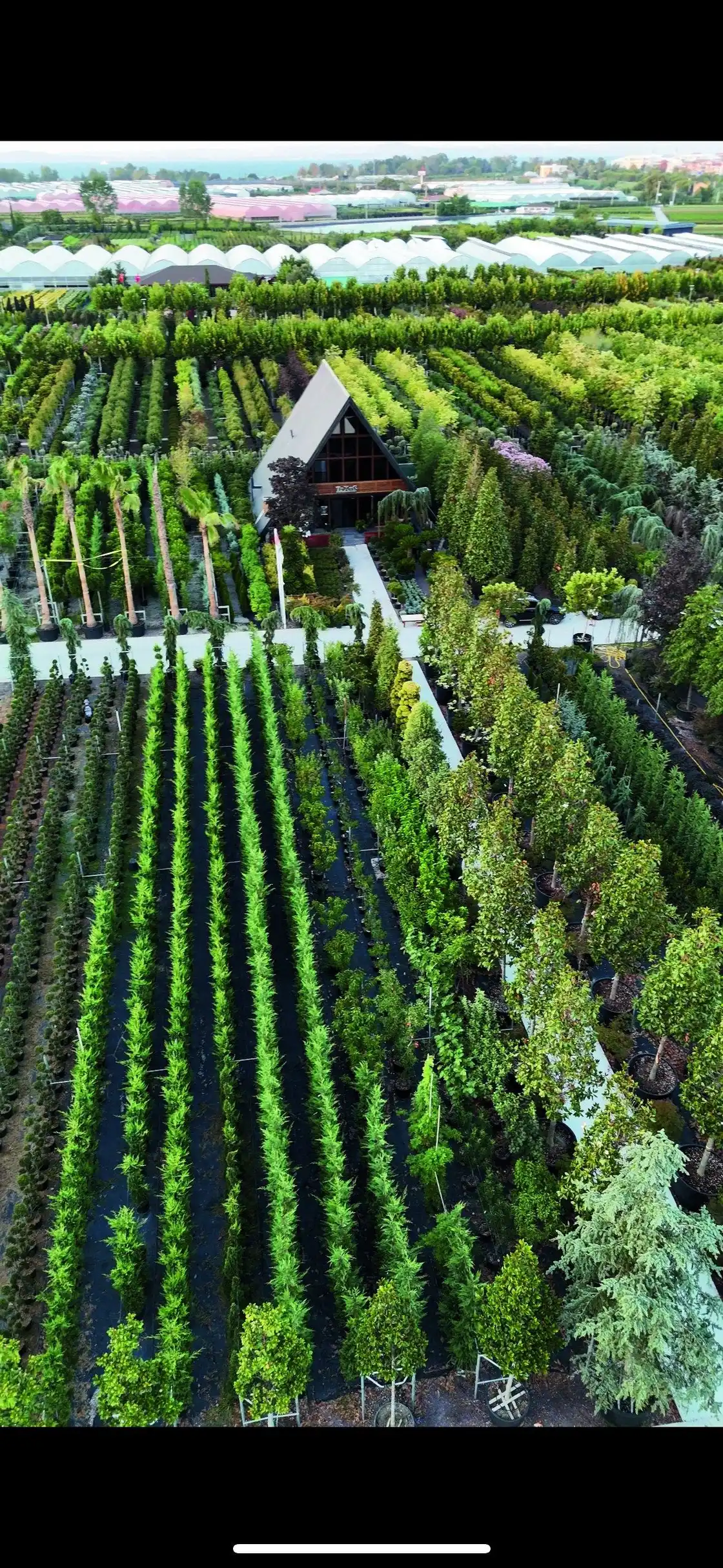
The plant list is the project’s central document
In a landscape project, the plant list is not just a procurement document — it is the core document that turns a design into something buildable. A list that is incomplete or vague leads to mispriced quotes and, on site, to species or size mismatches during installation. That is why the list should be prepared right after the design is finalised, with site conditions and the sourcing calendar already factored in.
Criteria for species selection
Species choice should start with the site’s physical conditions before visual preference:
- Climate fit: in a temperate-humid climate like Marmara, winter hardiness and summer drought tolerance both need to be weighed together.
- Soil structure: species prone to root rot should be avoided on heavy clay or poorly drained ground.
- Function: a median strip, an entrance axis, a boundary wall or a shaded area each call for a different growth form and maintenance intensity.
- Maintenance capacity: how much regular pruning, watering and pest control the team running the site can actually deliver directly limits which species make sense.
Getting the sizing standards clear
Stating measurements in the plant list with clear, measurable units prevents misunderstandings during sourcing and production:
| Plant group | Core measurements | Note |
|---|---|---|
| Standard tree | Trunk caliper (cm), overall height (m) | Caliper is usually measured 100 cm above ground |
| Topiary/formal plant | Height (cm/m), container size (litres) | The form type (ball, cone, umbrella) should also be stated |
| Shrub | Height (cm), container size (litres) | Branching density should be backed by a visual reference |
| Groundcover | Container size (litres), planting density (units/m²) | Time to full coverage depends on planting density |
Avoid relative terms like “large” or “medium” when specifying size — give a numeric range wherever possible (for example, trunk caliper 10-12 cm).
Calculating quantities and buffer stock
Quantities should be derived from the planting spacing in the installation plan. For shrubs and groundcover, a per-square-metre planting density is set and converted into a count over the area; for standard trees, positions are usually marked individually on the axis plan. Adding a modest buffer to the list — to cover transport damage, planting losses or supply fluctuations — helps avoid delays once work is under way on site.
Naming alternative species
When the project timeline is tight, relying on a single species raises sourcing risk. For each main species, it is worth naming one or two alternatives with a similar height, form and colour profile. The alternates list should be agreed with the supplier at the quoting stage and signed off by the designer. This step keeps last-minute substitutions on site from undermining the design’s overall intent.
The plant list’s role in the quoting process
A clearly prepared plant list also speeds up the quoting process itself:
- With species, size and quantity clearly defined, a supplier can turn a quote around faster.
- When alternative species and size ranges are stated, price comparisons come out more accurate.
- Sharing the delivery timeline alongside the list lets production and shipping be planned in advance.
- Because the list can be attached to the contract as a reference document, it reduces the chance of disputes further down the line.
Coordinating with the supplier
Once the plant list is drafted, an initial conversation with the supplier is the most practical way to pressure-test how workable it is on site. It’s worth clarifying a few things at this stage:
- Which items on the list are available from stock and which need to be grown or sourced to order — items requiring production have a direct impact on the project timeline.
- For large-caliper standard trees, whether individual selection (tagging) is possible at the supplier’s own site — especially important for visual focal points, where form and trunk quality matter most.
- Whether delivery will happen in one shipment or in batches tied to installation phases — on large projects, batched delivery reduces the storage burden on site.
- Ask the supplier to flag in advance any items that can’t meet the size tolerance stated in the list.
Keeping the plant list current through the project
A plant list is not a static document that gets fixed at the quoting stage and left alone. Changes in site conditions — ground conditions turning out different than expected, a section’s intended use changing — or hiccups in sourcing can all require the list to be updated before installation. Dating and archiving each revised version prevents confusion, for both the designer and the installation team, over which version is current.
Common mistakes to avoid
- Using inconsistent units across line items — caliper in cm for some, only “medium size” for others
- Not cross-checking the quantity count against the installation plan
- Leaving out alternative species, which then stalls the project when sourcing hits a delay
- Not including the delivery timeline in the list
When species selection, sizing standards and the sourcing calendar are all considered together while preparing the plant list, both the quoting process and the site installation become far more predictable. Taxus Fidancılık’s team can review your project’s plant list alongside species suitability and sourcing timelines.
Frequently asked questions
Which units of measurement should a plant list use?
For standard trees, trunk caliper (cm, usually measured 1 metre above ground) and overall height (m); for shrubs and formal plants, container size (litres) alongside height or caliper (cm). Relative descriptions like 'large size' get interpreted differently at the quoting and production stage, so measurable units should always be used instead.
Why does listing alternative species matter?
If a specific species cannot be sourced in the required size or quantity, it can delay delivery or stall the project. Naming one or two alternatives with similar visual and functional characteristics builds flexibility into sourcing and also makes price comparison easier at the quoting stage.
How much of a buffer quantity should be added?
This varies by project scale and plant type, but a buffer of roughly 5-10% for shrubs and groundcover, and 3-5% for standard trees, is generally sufficient. For high-traffic areas, public sites, or projects with a long transport distance, it is worth working closer to the upper end of that range.
Related content
-
An annual landscape maintenance plan for corporate campuses
An annual landscape maintenance plan for corporate campuses: a monthly calendar covering turf care, pruning, pest control and irrigation system checks.
-
A checklist for receiving plant deliveries on site
A practical quality checklist for receiving plants on site: root ball condition, trunk damage, labelling, size checks, delivery note matching and storage.
-
First-year care for newly planted trees
First-year care for newly planted trees: a practical watering schedule, staking, mulching, pruning and fertilising, with realistic timing for each step.