
Services
Plant & Tree Supply
We sell specimen trees, topiary, shrubs and ground cover. Our own stock grows on fields in Yalova, Terkos, Bursa and Sakarya; species we don't hold come from domestic and overseas nurseries.
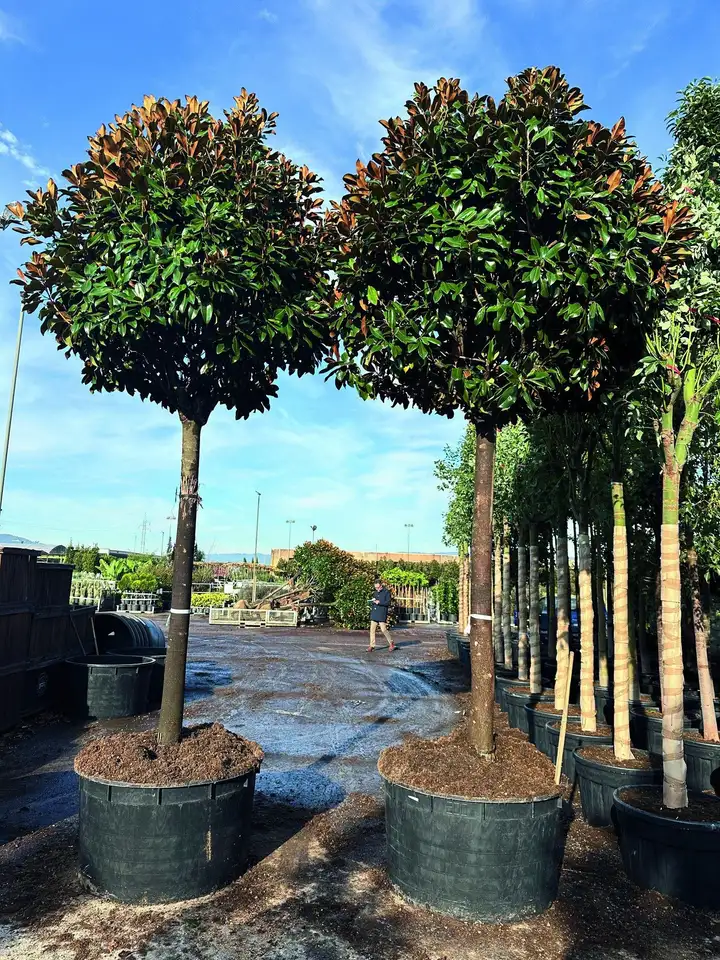
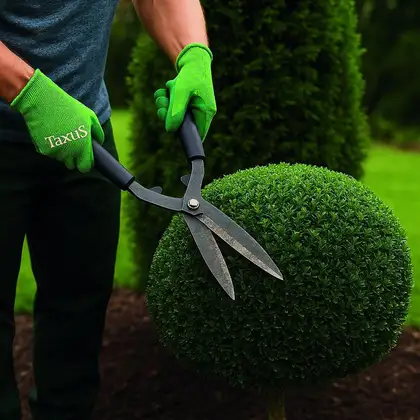
Three measurements that describe a tree
Height alone tells you very little. Two trees can both stand 3 metres tall, but if one has a 4 cm stem and the other 8 cm, they are different plants to move, to plant and to establish.
Stem size is measured 1 m above ground. European catalogues give girth (circumference) at that height rather than diameter: a 16/18 cm girth works out at roughly 5–6 cm across. Our export lists show both.
The third measurement is what the roots come in. For container-grown stock that's the pot volume in litres; for root-balled trees, the diameter and depth of the ball. As a rule of thumb, the ball should be at least ten times the stem diameter.
- Height: as a range in cm, e.g. 250–300
- Girth or diameter: measured 1 m above ground
- Pot size: in litres, C10, C35, C110 and up
- Root ball: diameter and depth in cm
Container-grown, root-balled or bare-root?
The same species can arrive in three forms. More often than not, the planting date decides which one you need.
Container-grown
The roots have formed inside the pot, so nothing is dug up; the plant simply comes out of it. It can be planted in any month, but June to August plantings need frequent watering for the first few weeks. Most topiary and shrubs are sold this way.
Root-balled
The tree is lifted from the field with its soil, and the ball is wrapped in hessian and a wire basket. Deciduous trees are lifted between November and March, conifers in October–November or March–April. Most large specimens travel like this.
Bare-root
Roots only, no soil. Used for deciduous whips and hedging, planted while dormant and when the ground isn't frozen. Roots must not dry out in transit and are kept under damp cover until planting.
What a good plant schedule includes
An incomplete list usually means quoting twice. Each line should carry:
For every item
- Botanical name, with cultivar if there is one (e.g. Taxus baccata 'Fastigiata')
- Quantity
- Height range in cm
- Pot size in litres, or root ball type
For specimen trees, also
- Girth or diameter, saying which
- Clear stem height: where the crown starts
- Single or multi-stem
- Crown spread, if it matters
For topiary
- Shape: ball, cone, spiral, pyramid, box
- Width and height of the form
- Whether you need matched pairs
For delivery
- Planting week or month
- Can an articulated lorry reach the site, or only a rigid truck?
- Is there a crane or forklift for unloading?
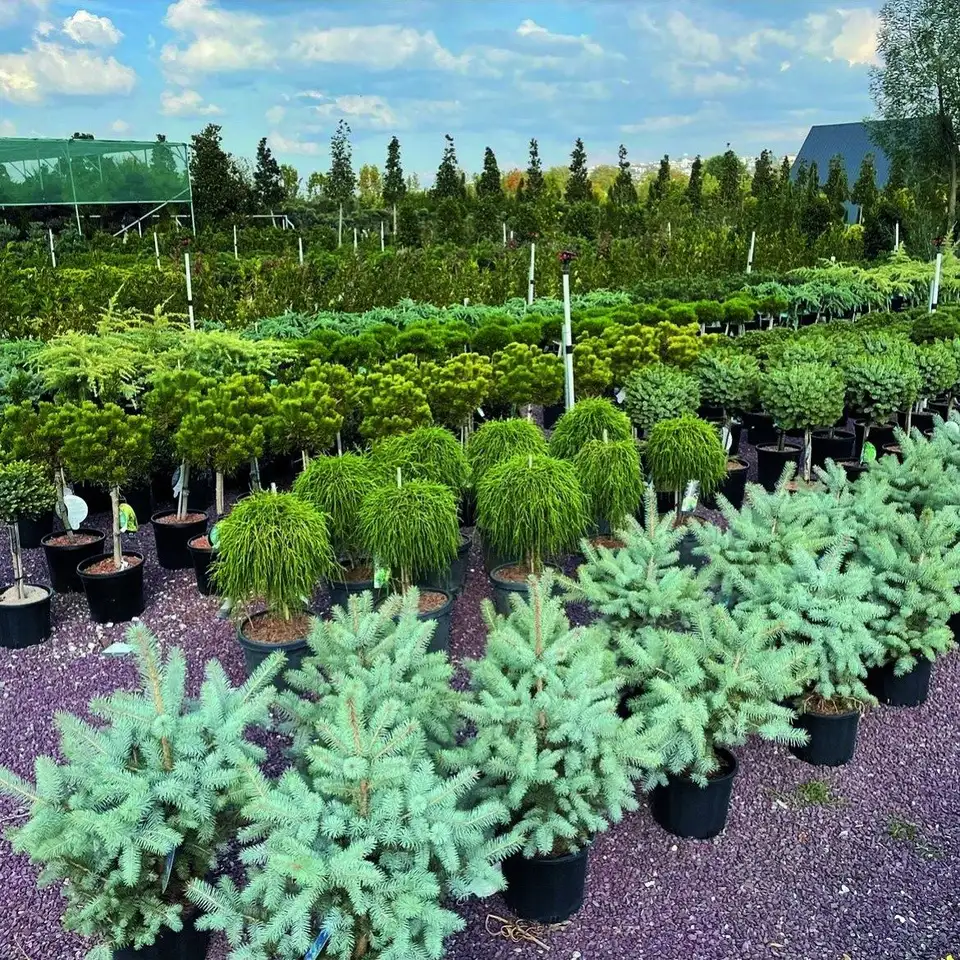
Choosing your trees in the field
For a feature tree, or a pair of topiary pieces flanking an entrance, picking from a photograph is a gamble. Crown balance, a straight stem and how closely two forms match only become clear when you stand next to them.
Project teams can visit by appointment and tag the trees they want one by one. Each selected plant gets a label with the project name, and that is the tree that goes to site.
For export orders, the phytosanitary certificate and labelling are completed before loading day.
Buying plants: common questions
Do you sell single trees?
Yes. Most of our work is bulk supply for projects, but we also take orders for a single garden.
What happens if a species on our list isn't in stock?
We ask our domestic and overseas suppliers first. If it can't be found, or won't arrive in time, we offer an alternative close in size and form. The project team makes the call.
Can a root-balled tree be planted in summer?
We'd advise against it. A tree lifted in summer loses roots it needs to keep its leaves supplied with water. If summer planting is unavoidable, choose container-grown stock; otherwise wait until late October.
Should our schedule give girth or diameter?
Both are measured 1 m above ground and both are in use. Just say which you mean; a 16/18 cm girth is roughly 5–6 cm in diameter.
How are plants delivered?
In loads split to match the planting programme. Plants in leaf travelling on open trailers are sheeted against the wind, and root balls are watered before loading.
Send us your plant list
A spreadsheet, a PDF or a photo of a handwritten page. Each line is checked against stock, and anything we can't match is flagged separately.