A species selection guide for landscaping in the Marmara climate
Climate data, wind and salinity exposure, frost risk and soil structure across the Marmara region, with practical guidance on species selection.
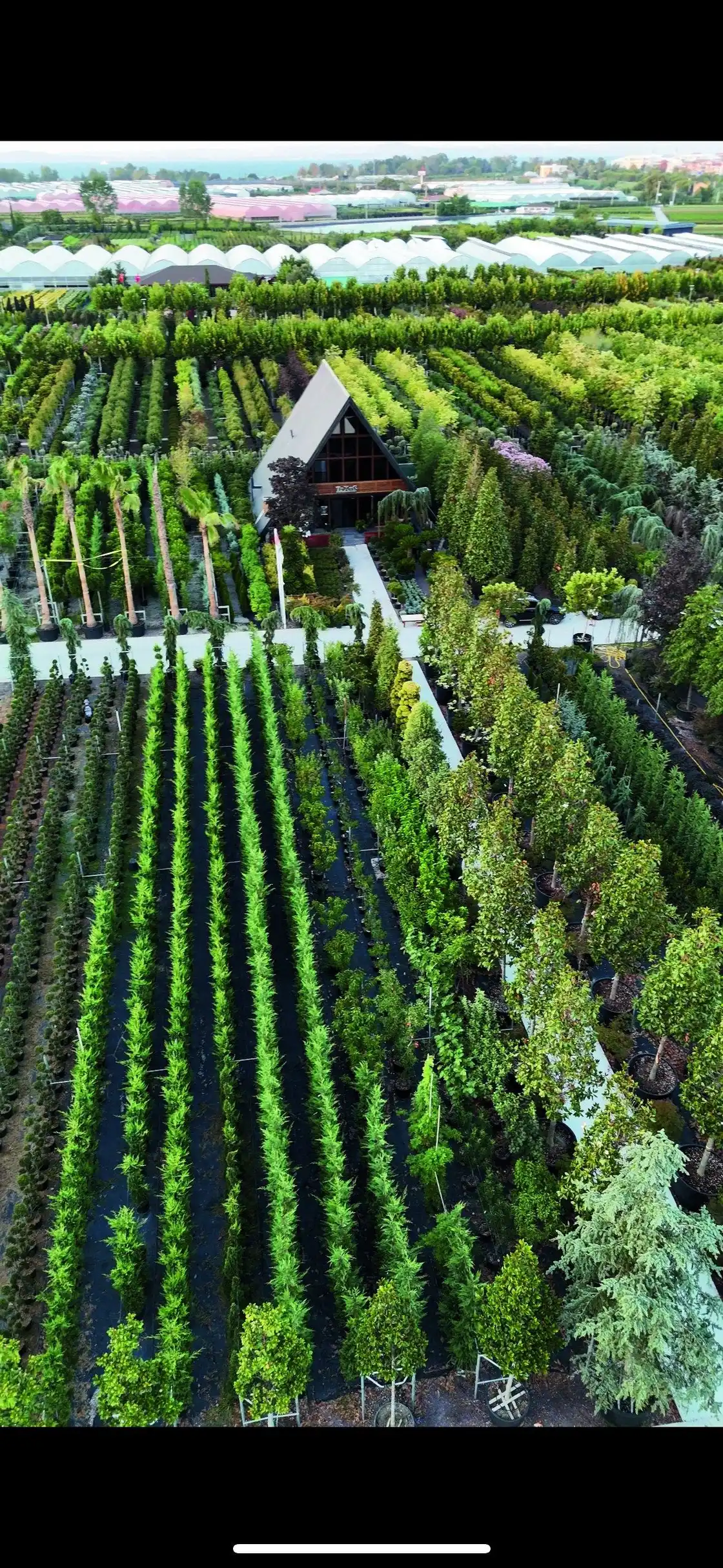
How the Marmara climate shapes landscape planning
The Marmara region sits in a transition zone where Black Sea and Mediterranean climate influences meet. Coastal areas see a humid, temperate climate, while further inland winters turn colder and summers drier. This variability makes it risky to select species based on a single definition of “Marmara climate” — a project site’s distance from the coast, elevation and local microclimate need to be assessed individually.
Based in Yalova, right in the middle of this transition zone, Taxus Fidancılık produces stock under these conditions directly, which gives us hands-on observation of how species groups suited to coastal and inland conditions actually perform.
General framework of regional climate data
- Average annual temperature: temperate on the coast, more variable inland
- Winter minimums: rarely drop below -5°C on the coast, can approach -10°C inland
- Annual rainfall: unevenly distributed across the region, concentrated in winter
- Humidity: high along the coastal strip, decreasing further inland
This data reflects general trends; for any given project it should be verified against the nearest meteorological station’s records.
Wind and salinity factors
In coastal landscape projects, salt particles carried by wind are a significant source of stress that damages leaf tissue. Within roughly 200-500 metres of the shoreline in particular, salt-sensitive species can show leaf scorch, early leaf drop and stunted growth.
Species grouped by salt tolerance
| Tolerance level | Example species groups | Recommended use |
|---|---|---|
| High | Olive (Olea), tamarisk, maritime pine (Pinus pinaster) | Coastal strip, windbreak |
| Moderate | Cypress (Cupressus), some Thuja cultivars | 300 m+ from the coast |
| Low | Sensitive-leaved ornamentals, some shrub species | Inland, sheltered from wind |
Establishing a first line of highly salt-tolerant species along the coastal strip to act as a windbreak protects the more sensitive species planted behind it.
Frost risk and species hardiness
Moving inland, winter night temperatures drop noticeably and frost risk increases. Frost damage is usually most visible in young shoots, newly planted stock, and species that flower early in spring.
Steps to reduce frost risk
- Assess the project site’s winter minimum temperature data using at least a 5-10 year average
- Place frost-sensitive species on gentle slopes or in wind-sheltered spots rather than low-lying hollows
- Mulch the root zone of newly planted stock through its first winter
- For early-flowering species, monitor bud development against the risk of late frost
- For critical projects, prefer locally sourced stock with tested frost tolerance
Soil structure and drainage
Soil structure across the Marmara region tends toward sandier-loamy profiles on the coast and higher clay content further inland. In clay-heavy soils, drainage problems pose a serious risk for species sensitive to root rot. Soil analysis and a drainage test are recommended before finalising species selection.
General species compatibility by soil type
| Soil type | Drainage characteristic | Species tendency |
|---|---|---|
| Sandy-loamy | Fast drainage | Drought-tolerant, salt-tolerant species |
| Clay-loam | Moderate drainage | Most standard landscape species |
| Heavy clay | Slow drainage, waterlogging risk | Species tolerant of moist soil and resistant to root rot |
Rather than forcing species selection to fit poorly drained sites, it is more sustainable to improve the infrastructure (drainage lines, raised planting beds) to bring the soil up to what the species needs.
Recommended species groups for coastal and inland sites
The table below summarises general tendencies; the final species decision for any project should be based on a review of local site conditions.
| Site type | Key characteristic | Example species groups |
|---|---|---|
| Coastal strip (0-300 m) | Salt and wind tolerance | Olive, tamarisk, maritime pine |
| Coastal-inland transition | Moderate salt tolerance, good drainage | Cypress, Thuja, some Ligustrum cultivars |
| Inland, plains | Frost tolerance, standard care | Yew (Taxus), various deciduous species groups |
| Inland, higher elevation | High frost tolerance | Local pine species, hardy conifers |
Seasonal water needs by species group
Summers in the Marmara region are generally dry, and water needs vary noticeably by species group during this period. Drought-tolerant species (olive, tamarisk, some conifers) can manage with low-frequency watering through summer, while moisture-loving species need regular, more frequent irrigation. When selecting species, matching plant water needs to the project’s irrigation infrastructure capacity also matters for operating costs.
General species tendency by water requirement
| Water requirement level | Example species groups | Irrigation approach |
|---|---|---|
| Low | Olive, tamarisk, drought-tolerant conifers | Infrequent, deep watering once established |
| Moderate | Cypress, Thuja, most standard shrub species | Regular, evenly spaced watering |
| High | Moisture-loving broadleaf ornamentals, lawn areas | Frequent, controlled watering |
In projects that make heavy use of low-water-need species, designing the irrigation system around that need — for example, a drip programme with longer intervals — both saves water and reduces the risk of root rot.
What to watch during implementation
Once species selection is settled, planting timing and the first-year care plan should also be adjusted for the regional climate. On the coast, regular flushing irrigation is recommended against summer humidity and salt stress; inland, pre-winter mulching and reduced watering frequency are more relevant.
Pre-implementation checklist
- Determine the project site’s distance from the coast and its elevation
- Commission a local soil analysis and drainage test
- Review winter minimum temperature data for the past 5-10 years
- Map out areas that require salt tolerance
- Narrow the species list against this data and confirm practical feasibility on site
Microclimate effects and project-scale assessment
Regional climate data shows the general trend, but even within the same district, or the same street, factors such as building shade, a wind corridor, or a nearby body of water can create noticeable microclimate differences. A north-facing garden corner sitting in a building’s shadow, for example, can stay several degrees colder than the same garden’s south-facing side — a difference that can decide whether a frost-sensitive species survives in that corner.
What to check in a microclimate assessment
- The shading and wind-corridor effect created by buildings and tall structures
- The moderating effect of a nearby lake, sea or large body of water
- The site’s aspect (south, north, east, west) and hours of sun exposure
- The risk of cold air pooling in low-lying areas (frost pockets)
- The heat-island effect that builds up near hardscape (concrete, asphalt)
These factors can mean different zones within the same project call for different species groups. In a villa garden, for instance, more frost-tolerant species might suit the north-facing side while more heat-loving species suit the south-facing side. The right decision at project scale comes from combining general regional data with direct microclimate observation of the site itself.
Monitoring species adaptation
A newly planted species’ adaptation to the site should be monitored closely for the first 1-2 years. The first winter and first summer in particular are the most critical periods for revealing a plant’s true hardiness. If symptoms such as leaf scorch, shoot-tip dieback or stalled growth appear during this period, the species choice may need to be reassessed within the scope of the project.
Conclusion
A successful landscape project in the Marmara region depends not on general climate assumptions but on species selection grounded in the project site’s own wind, salinity, frost risk and soil data. At Taxus Fidancılık, we grow species groups suited to these conditions across our production areas in Yalova, Terkos, Bursa and Sakarya, and offer project-based species recommendations. For further information, reach us at +90 539 438 29 87 or info@taxustr.com.
Frequently asked questions
Can the same species be used on the coast and inland in the Marmara region?
Partly. Salt-tolerant species grow well both on the coast and inland, but salt-sensitive species can be damaged along the coastal strip by wind-carried salt. Inland, lower winter night temperatures and frost risk become the more important factor.
Which species groups are most resistant to frost risk?
In general, local conifers (yew, cypress, pine species) and native broadleaf species adapted to the region tolerate low temperatures better. Exact hardiness limits vary by species and cultivar, so this should be assessed on a per-project basis.
Related content
-

Topiary production: technique and timeline
A practical look at species selection, frames and wire training, pruning schedules, and spiral and ball forms in topiary production, with timelines.
-
Landscape infrastructure: drainage and automatic irrigation systems
A technical guide to soil preparation, drainage types, drip and rotor irrigation, hydraulic design measurements and winterisation for landscape projects.
-
Plant health certification and the nursery export process
A practical guide to phytosanitary certificates, root ball and container conditions, labelling, and pallet loading for nursery stock exports.